
Flat Tire in Winter? Here’s What Cornwall Drivers Should Do
A flat tire is stressful any time of year, but in the middle of a cold Cornwall winter it can quickly turn from an inconvenience into a safety issue. Snow, ice, poor visibility, and freezing temperatures make roadside tire changes more dangerous and more difficult. Knowing what to do, what not to do, and when to call for professional help keeps you safe and gets you rolling again faster.
This guide explains step-by-step what Cornwall drivers should do when a flat tire happens in winter, how to stay safe on the roadside, and how local 24/7 tire change and roadside assistance services can help.
Recognize the Signs of a Flat Tire in Winter
Winter roads can hide potholes, debris, and sharp ice chunks under snow, so flats are more common than many drivers realize. In some cases you may not see the damage right away, but your vehicle will give you warning signs.
- Steering feels heavy or pulls strongly to one side.
- You hear a rhythmic flapping or thumping sound as you drive.
- Your tire pressure warning light switches on and stays on.
- The vehicle feels unstable, especially when cornering or braking.
If you notice any of these symptoms, slow down gradually, avoid hard braking, and look for a safe place to pull over as soon as possible. Continuing to drive on a flat, especially on cold, rigid winter tires, can destroy the tire and damage the wheel.
First Priority: Safety Before the Tire
When a flat happens in winter, your first priority is your safety—not the tire. Stopping in the wrong place can put you at risk from passing traffic, especially on snowy or icy roads where other drivers need extra distance to stop.
- Signal early and move slowly to the shoulder or a nearby parking lot.
- Avoid stopping on blind curves, hills, or narrow bridges whenever possible.
- Turn on your hazard lights immediately so other drivers can see you through snow or blowing slush.
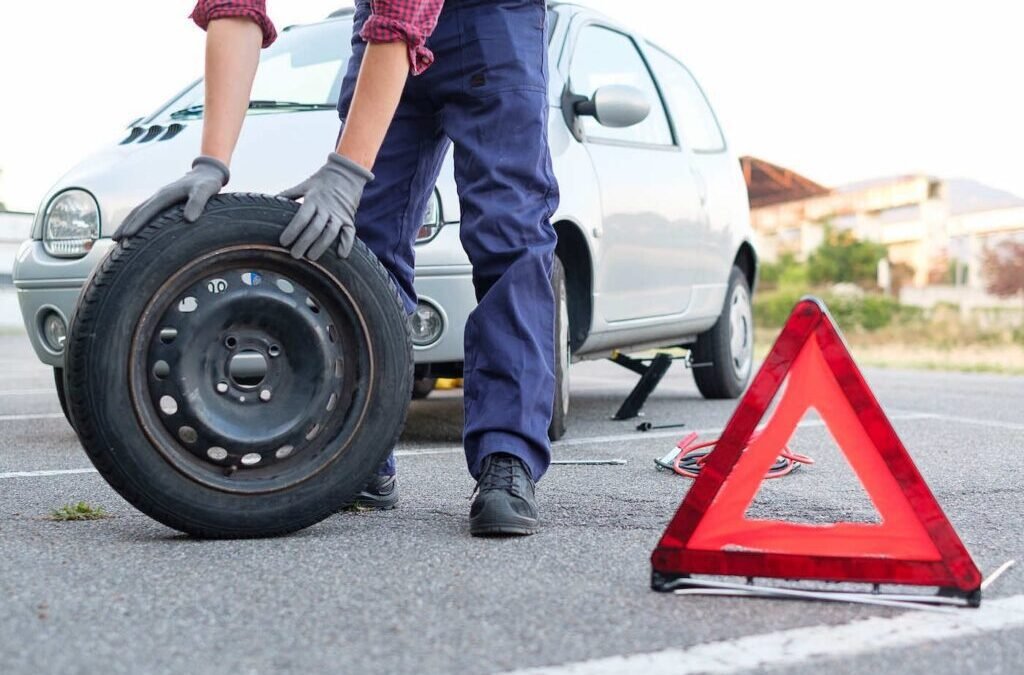
- If you have reflective triangles, place them behind your vehicle to increase visibility.
If you cannot reach a safe spot—such as a wide shoulder, side street, or parking lot—it is often safer to call for professional roadside assistance rather than attempting to change the tire yourself in live traffic.
Should You Change the Tire Yourself in Winter?
Many drivers can change a tire in good weather, but winter conditions in Cornwall add extra risks: slippery ground, low visibility, fast-moving traffic, and freezing temperatures that can cause numb fingers and slower reaction times.
Ask yourself these questions before deciding to change the tire yourself:
- Are you well off the roadway with plenty of space between you and traffic?
- Is the ground firm and level enough to safely support the jack?
- Do you have a properly inflated spare, jack, and lug wrench in the vehicle?
- Are you dressed warmly enough to work outside for 15–30 minutes?
- Is visibility good enough for other drivers to see you in time?
If the answer to any of these is “no,” it is safer to call for a mobile tire change service rather than risking a roadside injury or an improperly installed spare.
Step-by-Step: What to Do When You Get a Flat Tire in Winter
Follow these steps if you suspect a flat tire in winter conditions around Cornwall:
1. Slow Down Gradually
Take your foot off the accelerator and gently steer the vehicle straight. Avoid sudden braking, which can cause you to lose control on snow or ice. Smooth inputs give you more control over a vehicle with a compromised tire.
2. Move to a Safe Location
Signal and carefully move toward the shoulder, a side street, or a nearby parking lot. In busy areas or on highways, driving a short distance on a damaged tire to reach a safer location is usually better than stopping where other vehicles cannot see you in time.
3. Turn On Hazard Lights
Once parked, switch on your hazard lights and, if you have them, place reflective triangles or flares behind your vehicle. This is especially important in heavy snow, fog, or at night, when visibility is reduced.
4. Check the Tire
Step out carefully on the passenger side if possible, away from traffic. Inspect all four tires to confirm which one is flat. Look for sidewall bulges, visible punctures, or a tire that is visibly lower than the others.
5. Decide: DIY Change or Call for Help
If conditions are unsafe, your tools are missing, or the spare tire is absent or flat, call for roadside assistance right away. Cornwall Towing provides 24/7 emergency roadside service, including tire changes, across the city and surrounding areas.
How Mobile Tire Change Services Help in Winter
Mobile tire change and roadside assistance services exist precisely because winter conditions make roadside repairs difficult and dangerous for most drivers. Instead of wrestling with a jack in slush or icy wind, a trained operator brings professional tools directly to your location.
- They use proper jacks and equipment designed for safe lifting on different surfaces.
- They torque lug nuts to manufacturer specifications to prevent wheel or brake damage.
- They can assess whether your spare is safe or if a tow to a tire shop is a better option.
- They are equipped with lighting and safety gear to work in low-visibility conditions.
Cornwall Towing’s tire change service is available 24/7 and can be dispatched along with other roadside help if your flat tire is part of a larger issue, such as a damaged wheel or suspension.
Driving on a Spare Tire in Winter
Most vehicles carry a temporary “donut” spare tire designed for short distances and lower speeds. In winter, these limitations are even more important, because temporary spares often have less tread and grip than regular winter tires.
- Follow the speed limit printed on the spare (often 80 km/h or less).
- Avoid long highway journeys—use the spare only to reach a tire shop.
- Do not use a temporary spare for multiple weeks in winter conditions.
- If you have an all-wheel drive vehicle, running one smaller spare for too long can damage the drivetrain.
After installing a spare, plan to visit a tire shop as soon as possible to repair or replace the damaged tire. If you are far from a shop or uncomfortable driving on a spare in winter, consider requesting a tow to your preferred tire center instead.
Common Causes of Winter Flat Tires Around Cornwall
Understanding why flats happen in winter helps you prevent them. Cold temperatures and winter road maintenance change how your tires wear and how they interact with the road surface.
- Potholes hidden under snow: Deep potholes can pinch the tire between the rim and road, causing sidewall damage or bent wheels.
- Sharp ice and packed snow: Frozen chunks can act like blades, slicing or puncturing tread and sidewalls.
- Underinflation in cold weather: Tire pressure drops as temperatures fall, increasing flexing and heat, which leads to damage.
- Debris from previous collisions or breakdowns: Nails, screws, and metal fragments are harder to see when covered by slush.
- Old or worn tires: Tires with low tread or aging rubber are more likely to fail in harsh winter conditions.
Regular pressure checks and timely tire replacement before winter starts significantly reduce your chances of getting stranded with a flat in January or February.
How to Reduce the Risk of Flat Tires in Winter
While no driver can completely eliminate the risk of flats, a few preventive habits go a long way in Cornwall’s winter climate.
- Install quality winter tires with adequate tread before the first major snowfall.
- Check tire pressure at least once a month, and especially after major temperature drops.
- Avoid driving straight through large potholes; slow down and go around when safe.
- Stay a bit farther from snowbanks where hidden debris may be buried.
- Inspect your tires visually for cuts, bulges, or exposed cords.
- Rotate tires regularly so wear is even and predictable.
Good tire maintenance not only reduces puncture risk but also improves traction and stopping distance in snow and ice, giving you more control in emergencies.
When a Flat Tire Means You Need Towing, Not Just a Change
Some flats are simple punctures; others signal bigger problems. In winter, hidden damage can be more severe because of potholes and hard impacts under snow.
Consider calling for a tow instead of just a tire change if:
- The wheel itself looks bent, cracked, or badly scuffed.
- You smell burning rubber or notice unusual vibrations even after installing a spare.
- Multiple tires are flat or damaged at once.
- Suspension components, like control arms or struts, appear broken or misaligned.
- Your vehicle is stuck in snow or mud in addition to having a flat.
Cornwall Towing can combine tire change service with 24/7 towing if your vehicle is not safe to drive after the flat.
Frequently Asked Questions
Is it safe to change a tire on the highway in winter?
It is rarely ideal to change a tire on the shoulder of a busy highway, especially in snow or low visibility. If you cannot reach a safe exit or wider shoulder, it is safer to call for roadside assistance and remain inside your vehicle with your seatbelt on until help arrives.
Can I drive on a flat tire to reach home?
Driving on a completely flat tire can destroy the tire and damage the wheel, potentially leading to much more expensive repairs. In an emergency you may need to move a short distance to a safer location, but you should drive slowly and call for a tire change or tow as soon as possible.
How long can I use a temporary spare tire in winter?
Temporary spares are intended for short distances only—usually just long enough to reach a tire shop. They are not designed for extended winter use or highway speeds. Replace or repair the damaged tire as soon as possible after installing a spare.
What if I don’t have a spare tire?
Many newer vehicles come with repair kits instead of full-size spares, and some have none at all. If you have no usable spare, call for a mobile tire change or a tow to a nearby tire shop so the damaged tire can be repaired or replaced.
Can roadside assistance fix the tire on the spot?
Roadside assistance typically installs your spare tire rather than performing full tire repairs in a parking lot or on the roadside. If the tire can be safely repaired, that work is usually done at a tire shop after your vehicle is towed or driven there on the spare.
What should I keep in my car to be prepared for a flat in winter?
Helpful items include a properly inflated spare, jack, lug wrench, gloves, a small shovel, a flashlight, reflective triangles, and a fully charged phone. These basics make a winter flat easier to manage while you wait for help or perform a safe tire change.
Flat Tire in Winter? Cornwall Towing Can Help 24/7
A flat tire in winter doesn’t have to turn into an all-day ordeal or a dangerous roadside situation. With professional tire change service, roadside assistance, and 24-hour emergency towing, Cornwall drivers have reliable help available any time a tire fails.
Whether you are stuck in a parking lot, on a residential street, or along a busy corridor, trained operators can arrive with the right tools to change your tire, install your spare, or tow your vehicle to a trusted tire shop. When in doubt, choose safety and call for help rather than risking a cold, dangerous roadside repair.
Flat tire in winter? Reach out to your local Cornwall tire change and roadside assistance team for fast, professional help whenever you need it.