
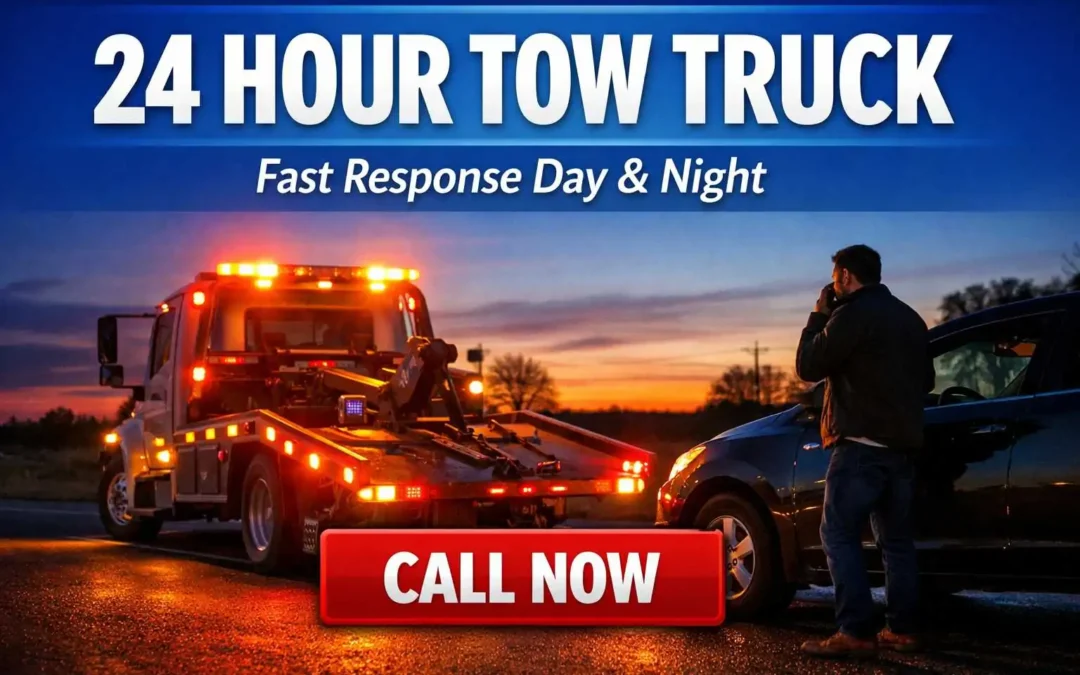
Tow Truck vs Flatbed: Which Towing Method Does Your Car Actually Need?
A flatbed tow truck carries your car entirely off the ground — all four wheels on the deck, zero road contact. A wheel-lift tow truck lifts two wheels and tows the car with the other two rolling on the road. For most modern vehicles in Cornwall — especially AWD, luxury, lowered, or damaged cars — a flatbed tow is the safer and better choice. Cornwall Towing uses flatbed equipment as standard for this reason.
You call for a tow truck and a truck shows up. Simple, right? Not exactly. There are two fundamentally different types of tow truck — and using the wrong one can cause real damage to your car. The difference is not cosmetic. It is mechanical, and for certain vehicles, choosing wrong means a transmission rebuild, damaged drivetrain, or scratched bodywork.
Most people do not know the difference until they are standing on the shoulder watching their car get loaded. By then, the decision has already been made for them. This guide explains exactly how each tow truck type works, which vehicles need which method, and why Cornwall Towing defaults to flatbed tow service for the majority of calls. Ontario’s towing safety regulations require licensed operators and proper equipment — understanding the difference helps you make informed choices.
For pricing on either method, visit our 2026 towing cost guide and flatbed towing cost breakdown.
The Two Types of Tow Truck: How They Actually Work
Every tow truck on the road falls into one of two categories. Understanding how each one handles your vehicle is the key to making the right choice:
Which Tow Truck Method Does Your Vehicle Need?
This table answers the question for every common vehicle type and situation. If you are unsure, default to flatbed tow — it is always the safer option:
Notice the pattern — only two scenarios where a wheel-lift is truly safe, and even those situations are better handled by flatbed. This is why Cornwall Towing uses flatbed tow truck equipment as our default for every car tow. For details on our flatbed towing service, visit the service page.
What Happens When the Wrong Tow Truck Method Is Used
This is not theoretical. These are real mechanical outcomes that mechanics in Cornwall see regularly from improper towing:
⚠️ Transmission damage on AWD vehicles
When an AWD car is wheel-lifted, the two wheels on the ground spin freely while the two lifted wheels are stationary. This forces the centre differential to operate without proper lubrication, generating heat that destroys internal components. A transmission rebuild costs $3,000 to $7,000 — far more than the price difference between a wheel-lift and a flatbed tow.
⚠️ Electric motor damage on EVs and hybrids
The wheels of an electric vehicle are physically connected to the electric motor. Dragging those wheels on the ground forces the motor to spin, generating electricity with nowhere to go. This can fry the motor controller, damage the battery management system, or cause overheating. Tesla, Hyundai, and most EV manufacturers specifically require flatbed transport.
⚠️ Bumper and body panel damage
The metal yoke on a wheel-lift contacts the underside of the vehicle near the wheels. On lowered cars, vehicles with aftermarket body kits, or those with plastic bumper covers that extend low, the yoke can scrape, crack, or dislodge panels. This damage is cosmetic but costly to repair — $500 to $2,000 depending on the vehicle.
⚠️ Tire and brake wear on long tows
Two wheels rolling on the road for 100+ kilometres without engine power means no power steering fluid circulation, no brake boost, and uneven tire wear from the towing angle. On long-distance tows, this accumulates into real damage to tires, brake pads, and steering components. For anything beyond local distance, flatbed eliminates all of this.
Flatbed Tow vs Wheel-Lift: What Each Costs in Cornwall
One of the main reasons people consider a wheel-lift is cost. Here is the actual price comparison for a standard car tow in Cornwall:
The price difference between a flatbed tow and a wheel-lift is typically $10 to $50 — a fraction of what a single drivetrain repair costs. This is why we tell every caller the same thing: the flatbed is worth it. For more on fair pricing, visit our affordable towing guide and our guide to what your towing dollar pays for. Consumer rights around towing pricing are covered in our Ontario towing laws guide.
Flatbed Is Our Standard. Not an Upgrade.
Every Cornwall Towing call gets flatbed equipment — same price, zero risk
When a Wheel-Lift Tow Truck Is Acceptable
To be fair, wheel-lift towing has a legitimate place. It is not always dangerous — just limited. Here are the narrow conditions where wheel-lift is genuinely acceptable:
✅ Front-wheel-drive vehicle only
The drive wheels (front) must be lifted off the ground. If the front wheels are lifted and the rear wheels roll, there is no drivetrain engagement. This only works with confirmed FWD vehicles — not “I think it’s front-wheel drive.”
✅ Short distance only
Under 10 to 15 kilometres, the tire wear and brake component wear from being dragged at towing speed is minimal. Beyond that distance, the cumulative effect starts to matter.
✅ No body damage or lowered suspension
The yoke needs clearance under the vehicle. If the car is lowered, has a damaged bumper hanging down, or has aftermarket aero kits, the yoke cannot attach without scraping.
✅ Tight space where flatbed cannot access
Parking garages, narrow alleys, and tight residential driveways sometimes cannot accommodate a full-size flatbed. A wheel-lift truck is more compact and can access these spaces. Even then, the car is typically wheel-lifted to an open area and transferred to a flatbed for the actual tow.
If all four of those conditions are met, a wheel-lift is fine. If even one is missing, flatbed tow is the correct answer. When in doubt, ask the operator — or call Cornwall Towing at 613-907-6997 and we will advise you on the right approach for your vehicle.
How Flatbed Towing Works: The Loading Process
If you have never had a car tow on a flatbed tow truck, here is what happens step by step:
The truck bed tilts to ground level
Hydraulics lower the rear of the flatbed until the back edge is nearly flat with the road. This creates a ramp that the vehicle can drive onto or be winched up.
Your vehicle is loaded onto the deck
If the car runs, it drives on under its own power. If not, the operator uses a winch cable attached to the vehicle frame to pull it up the angled deck. This takes two to five minutes.
The bed tilts back to transport position
Once the vehicle is positioned on the deck, the hydraulics lift the bed back to level. The car now sits flat on top of the truck with all four wheels completely off the ground.
Vehicle is strapped and secured
Wheel nets, tire straps, or tie-down points secure the vehicle to the deck. The car cannot move during transport — no shifting, no bouncing, no sliding. The operator verifies tension on all points before driving.
Transport and delivery
The truck drives to your destination. At arrival, the process reverses — bed tilts down, straps released, car rolls off or is winched down. Your vehicle has experienced zero road contact, zero drivetrain stress, and zero additional mileage.
Cornwall Towing: Flatbed Service for Every Call
Cornwall Towing dispatches flatbed tow truck equipment as standard — not as an upgrade, not as a special request, and not at a premium price. Whether you need a car tow from your driveway or accident recovery on Highway 401, you get a flatbed.
We also provide roadside assistance (battery boost, flat tire, fuel delivery, lockout), heavy towing, boat towing, and scrap car removal across our full service area — Downtown Cornwall, Brookdale Corridor, East Ridge, Glen Walter, and 24 hours a day. Visit all services.
Tow Truck vs Flatbed FAQ
Is a flatbed tow truck more expensive than a regular tow truck?
Slightly — typically $10 to $50 more depending on distance. For local tows under 10 km, the difference is often only $10 to $15. Given that using the wrong towing method can cause $500 to $7,000+ in drivetrain or body damage, the small price premium for a flatbed tow is insignificant.
Can an AWD car be towed with a wheel-lift?
No — not without risking serious drivetrain damage. AWD systems connect all four wheels to the engine through a centre differential. Towing with two wheels on the ground forces the differential to operate without lubrication. A flatbed tow truck is the only safe option for AWD vehicles.
Does Cornwall Towing use flatbed or wheel-lift trucks?
Cornwall Towing uses flatbed tow trucks as standard equipment. Every car tow we perform uses flatbed unless a specific situation requires otherwise. You do not need to request it — it is what we send.
Can a Tesla or electric car be towed on a wheel-lift?
No. Tesla and most EV manufacturers specifically require flatbed transport only. Dragging the wheels of an EV forces the electric motor to generate electricity that can damage the motor controller and battery system. Always use a flatbed tow truck for any electric or hybrid vehicle.
How long does it take to load a car onto a flatbed?
Typically 10 to 15 minutes including positioning the truck, loading the vehicle (drive-on or winch), securing with straps, and conducting a pre-departure check. A wheel-lift hookup takes about 5 minutes — so the flatbed adds roughly 5 to 10 minutes. A small time investment for significantly better protection.
What if a flatbed cannot access my location?
In rare cases — tight parking garages, narrow alleys — a flatbed may not fit. In those situations, a wheel-lift can extract the vehicle to a nearby open area, and then the car is transferred to a flatbed for the main tow. This ensures the long-distance portion of the tow is still flatbed-safe.
Should I ask for a flatbed when I call a tow company?
Yes — always specify that you want a flatbed tow, especially if you drive an AWD vehicle, EV, luxury car, or any vehicle with low clearance. Not all tow companies default to flatbed, and some will send a wheel-lift unless you specifically request otherwise.
Is flatbed better for accident-damaged vehicles?
Always. Accident-damaged vehicles often have bent frames, flat tires, broken suspension, or fluid leaks that make wheel-lift dangerous or impossible. A flatbed loads the entire vehicle regardless of condition. For collision assistance, see our accident towing page and collision reporting guide.
Can I tow a motorcycle with a wheel-lift tow truck?
No. Motorcycles have only two wheels and cannot be safely wheel-lifted. They must ride on a flatbed tow truck deck with a wheel chock and soft-loop straps. See our motorcycle towing guide for the full securing process.
What other services does Cornwall Towing provide?
Along with flatbed tow service, we provide heavy towing, roadside assistance, battery boost, lockout service, breakdown towing, long distance transport, and scrap car removal. View all services.
Cornwall Towing
Every Tow. Flatbed. No Exceptions.
Zero road contact · Zero drivetrain risk · 24/7 dispatch · Cornwall and SDG Counties