
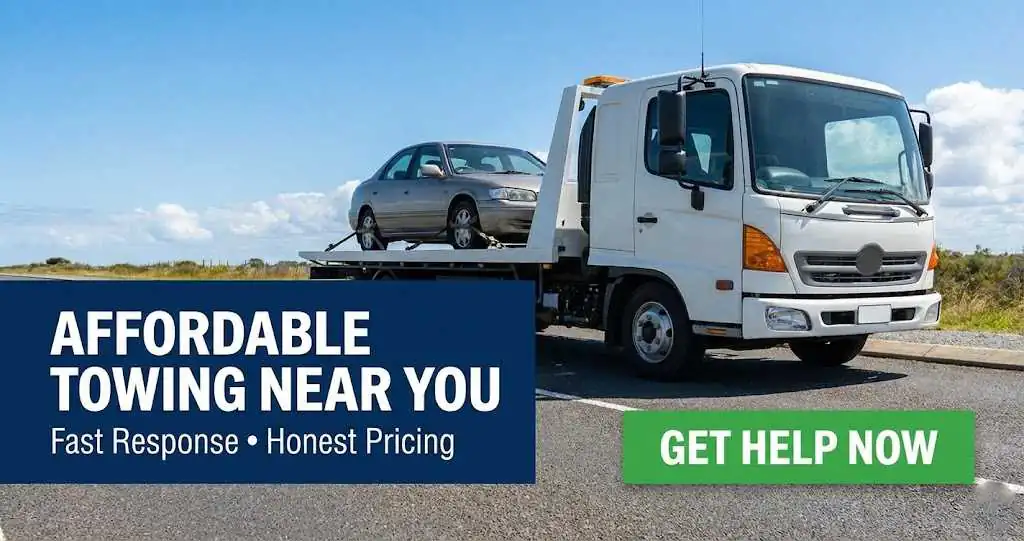
Long Distance Vehicle Transport in Ontario: What It Actually Costs and How the Process Works
Moving a vehicle long distance is one of those things that sounds simple until you start asking questions. How much does it cost per kilometre? Is there a base fee plus mileage, or a flat rate? Does vehicle size change the price? What about after-hours pickup? Will they use a flatbed or a wheel-lift?
Most vehicle transport companies give you a number on the phone and leave it at that. This guide breaks down exactly how long distance towing pricing works in Ontario — the cost formula, route-specific pricing from Cornwall, the factors that push your quote up or down, and a step-by-step explanation of how the logistics actually work from booking to delivery.
If you are looking for when long distance towing makes sense and what situations call for it, see our long distance towing guide. This post focuses on the numbers and the process.
How Vehicle Transport Pricing Works in Ontario
Every vehicle transport quote in Ontario is built from the same basic components. Understanding the formula helps you evaluate whether a quote is fair — and identify when a company is padding the price.
$75 – $125
Base / Hookup Fee
Covers dispatch, travel to your location, loading the vehicle onto the flatbed, and securing it. This fee applies regardless of distance — even a 1 km tow includes the base fee.
$2.50 – $4.50
Per Kilometre Rate
The mileage rate typically decreases with distance. Short tows cost more per km; longer hauls bring the per-km rate down because fixed costs (base fee, loading time) are spread across more kilometres.
+15 – 25%
After-Hours Surcharge
Evening, overnight, weekend, and holiday calls carry a premium. For planned transport, scheduling during weekday business hours saves 15 to 25 percent on the total cost.
The formula: (Base Fee) + (Distance × Per-KM Rate) + (Surcharges if applicable) = Total. A 100 km daytime tow at $100 base + $3.00/km = roughly $400. The same tow at 2 AM with the after-hours surcharge becomes roughly $480. For exact pricing, visit our flatbed towing cost breakdown or our 2026 towing cost guide.
Route-Specific Pricing From Cornwall
These are 2026 estimated ranges for vehicle transport of a standard car or SUV on a flatbed from Cornwall, Ontario. Actual quotes depend on vehicle type, scheduling, and specific pickup/delivery addresses.
| Destination | Distance | Daytime Range | After-Hours |
|---|---|---|---|
| Montreal, QC | ~110 km | $225 – $400 | $280 – $500 |
| Ottawa, ON | ~160 km | $250 – $425 | $310 – $530 |
| Kingston, ON | ~200 km | $300 – $500 | $375 – $625 |
| Brockville, ON | ~110 km | $225 – $400 | $280 – $500 |
| Toronto / GTA | ~400 km | $450 – $800 | $560 – $1,000 |
| Belleville, ON | ~290 km | $375 – $625 | $470 – $780 |
| Hawkesbury, ON | ~100 km | $200 – $375 | $250 – $470 |
| Smiths Falls, ON | ~160 km | $250 – $425 | $310 – $530 |
Not seeing your destination? Call 613-907-6997 for a quote to any Ontario or Quebec location. For pricing context on local towing within Cornwall and SDG Counties, see our affordable towing guide.
8 Factors That Change Your Vehicle Transport Quote
Two people requesting a tow to the same city can get very different quotes. Here is what moves the number:
Total distance
The primary cost driver. More kilometres equals a higher total, though the per-km rate typically drops as distance increases. A 100 km tow might cost $3.50/km while a 400 km tow might average $2.50/km.
Vehicle size and weight
A Honda Civic and a Ford F-350 dually do not cost the same to transport. Heavier vehicles burn more fuel, require more securing equipment, and may need a larger flatbed. Full-size trucks and SUVs typically add 15 to 30 percent over compact cars. For very large vehicles, see our heavy towing service.
Time of service
Weekday daytime is the cheapest window. After-hours (evenings, nights, weekends, holidays) adds 15 to 25 percent. Planned transports can always be scheduled during regular hours to avoid the surcharge entirely.
Vehicle condition
A running car that can be driven onto the flatbed is easier and cheaper to load than a car with four flat tires, no steering, or crash damage. Vehicles that require a winch for loading add $50 to $150 to the base fee. See our winching service for details.
Pickup accessibility
A car parked on a wide driveway is easy. A car in a tight underground parking garage, a narrow laneway, or a rural property down a gravel road takes longer and may require repositioning. Difficult access adds time, and time is cost.
Route conditions
Highway 401 is flat, fast, and straightforward. Rural county roads take longer and burn more fuel per kilometre. Toll routes (Highway 407 near the GTA) add toll costs to the invoice. Winter conditions — check Ontario 511 for real-time road reports — may add time and fuel consumption on any route.
Deadhead return distance
After delivering your vehicle, the flatbed drives back empty. Some of that return trip cost is built into your quote. This is why very long distance tows have a higher total — the truck must make the round trip even though it only carries a load one way.
Emergency vs. planned
Emergency breakdowns on Highway 401 require immediate dispatch, which means the truck drops everything and comes to you. Planned vehicle transport can be scheduled days or weeks ahead, allowing the operator to optimize routing and timing — which typically results in a lower quote.
Vehicle Transport vs. Driving It Yourself: The Real Cost Comparison
At first glance, a towing vehicle quote of $450 to Toronto looks expensive compared to just driving. But the true cost of driving is not just fuel. Here is a realistic comparison for a Cornwall-to-Toronto move:
The gap narrows fast when you factor in the real cost of your time, vehicle wear, and the possibility of breakdown on an unfamiliar vehicle. For project cars, vehicles without valid plates, or anything that should not be accumulating road miles, vehicle transport is the only safe option. For background on value-based towing, see what your towing dollar pays for.
Get an Exact Transport Quote
Tell us pickup, destination, and vehicle type — we quote it in minutes
How the Vehicle Transport Process Works: Step by Step
Whether you are booking an emergency tow from a Highway 401 shoulder or scheduling a planned towing vehicle pickup next Tuesday, here is the process:
Step 1 — Call and provide details
Call 613-907-6997 with: your exact pickup address, the delivery destination, vehicle year/make/model, the vehicle condition (running or not, accident damage, flat tires), and your preferred timing. The more specific you are, the more accurate the quote.
Step 2 — Receive your upfront quote
We calculate the route, factor in vehicle type and timing, and give you a firm price before dispatch. No estimates, no “we’ll see when we get there.” The price you agree to is the price you pay — period.
Step 3 — Flatbed arrives and loads
The operator arrives at your pickup location with a flatbed tow truck. If the vehicle runs, it drives onto the deck. If not, it is winched on. The car is then secured with straps, wheel nets, and/or tire blocks. Loading typically takes 10 to 20 minutes.
Step 4 — In transit
Your vehicle rides on the flatbed with zero road contact — no wear on tires, brakes, or drivetrain. The truck takes the most efficient highway route. Cornwall to Ottawa is approximately 1.5 to 2 hours, Montreal about 1.5 hours, and Toronto about 4 to 4.5 hours.
Step 5 — Delivery and unloading
The flatbed arrives at the destination, unloads the vehicle, and the operator verifies the condition with the person receiving it. Delivery is to the specific address you provided — a home driveway, repair shop, dealership, auction lot, or storage facility.
Step 6 — Payment
Payment is collected upon delivery — the quoted amount with no surprises. For insurance claims or dealership accounts, direct billing arrangements can be made in advance.
5 Ways to Reduce Your Long Distance Transport Cost
Schedule during business hours
Avoiding the after-hours surcharge on a $400 tow saves $60 to $100 instantly. If it is not an emergency, book for a weekday morning.
Ensure easy vehicle access
Have the vehicle on a flat, open surface with clear access for the flatbed. Move other vehicles out of the way. Unlock the steering. The faster loading goes, the lower your cost.
Check your insurance coverage
Many auto policies include towing coverage — some up to $500 per incident. If your breakdown triggers a claim, the tow may be partially or fully covered. CAA memberships also include limited distance towing. Check our roadside assistance vs. CAA comparison for details.
Use a local towing company, not a broker
National dispatching services and online brokers add a middleman markup of 20 to 40 percent. Calling a local company like Cornwall Towing directly means you are paying the operator’s actual rate, not the broker’s margin on top.
Be flexible on timing
If the tow company has a truck already heading in your direction for another job, they may offer a better rate to fill an otherwise empty return trip. Ask if there is a scheduled run heading your way soon.
Cornwall Towing’s Long Distance Coverage
Cornwall Towing provides long distance towing and vehicle transport from our service area to virtually any destination in Ontario and Quebec. Common routes include:
Local towing is also available across Downtown Cornwall, Brookdale Corridor, East Ridge, Glen Walter, and all SDG Counties. For motorcycle-specific transport, see our motorcycle towing guide. For complete details, visit our services page.
Long Distance Vehicle Transport FAQ
How much does vehicle transport cost per kilometre in Ontario?
Typical rates range from $2.50 to $4.50 per kilometre, with higher per-km rates for shorter distances and lower rates for longer hauls. The per-km rate usually drops as total distance increases because the base fee and loading costs are spread across more kilometres.
How much to transport a vehicle from Cornwall to Toronto?
Cornwall to Toronto vehicle transport typically runs $450 to $800 during daytime hours for a standard car or SUV. The approximately 400 km highway route via the 401 takes about 4 to 4.5 hours. After-hours, expect $560 to $1,000. Call 613-907-6997 for an exact quote.
Do you use a flatbed for long distance towing?
Yes. Cornwall Towing uses flatbed trucks exclusively for long distance towing. Flatbed transport means zero road contact — no wear on your tires, brakes, or transmission, and no risk of drivetrain damage that can occur with wheel-lift towing over long distances.
Can you transport a vehicle that does not run?
Yes. Non-running vehicles are winched onto the flatbed using our winch equipment. This includes vehicles with dead batteries, flat tires, accident damage, locked transmissions, or missing keys. A winch loading fee of $50 to $150 may apply depending on the situation.
How far in advance should I book planned vehicle transport?
One to three days in advance is ideal for planned moves. This gives the dispatcher time to schedule the truck efficiently, which may result in a better rate. Same-day transport is available but is treated as an on-demand service and may carry a higher cost.
Can I ride in the tow truck during long distance transport?
In most cases, yes — there is room in the cab for the vehicle owner. However, this depends on operator policy and insurance. Let the dispatcher know when booking if you need to ride along so they can confirm availability.
Is my vehicle insured during transport?
Professional towing companies carry liability and cargo insurance that covers your vehicle while it is on the truck. Your own auto insurance policy may also provide coverage during transport. Contact your insurer if you want to confirm your specific coverage before booking.
Do you transport vehicles across provincial lines?
Yes. Cornwall sits right on the Ontario-Quebec border, and we regularly transport vehicles between Ontario and Quebec. Cornwall to Montreal is one of our most common routes. Cross-provincial transport has no additional regulatory fees for standard vehicles.
What is the difference between long distance towing and vehicle shipping?
Long distance towing uses a single flatbed truck for direct, door-to-door transport — typically within Ontario and Quebec. Vehicle shipping usually refers to multi-car carriers that transport several vehicles at once over very long distances (cross-country or cross-border). Towing is faster and more flexible; shipping is cheaper per vehicle for very long distances but takes longer and involves terminal pickups.
What other services does Cornwall Towing provide?
Along with vehicle transport, we offer local flatbed towing, heavy-duty towing, roadside assistance, battery boost, lockout service, flat tire help, fuel delivery, and scrap car removal. See all services.
Long Distance Vehicle Transport
Upfront Pricing. Flatbed Only. Door to Door.
Cornwall → Ottawa · Montreal · Toronto · Kingston · Anywhere in Ontario & Quebec